The National Bureau of Statistics (NBS) and other stakeholders have called for stronger institutional collaboration, increased development financing and collective accountability to accelerate Nigeria’s implementation of the Sustainable Development Goals (SDGs), with only four years remaining before the 2030 deadline.
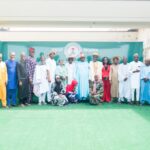
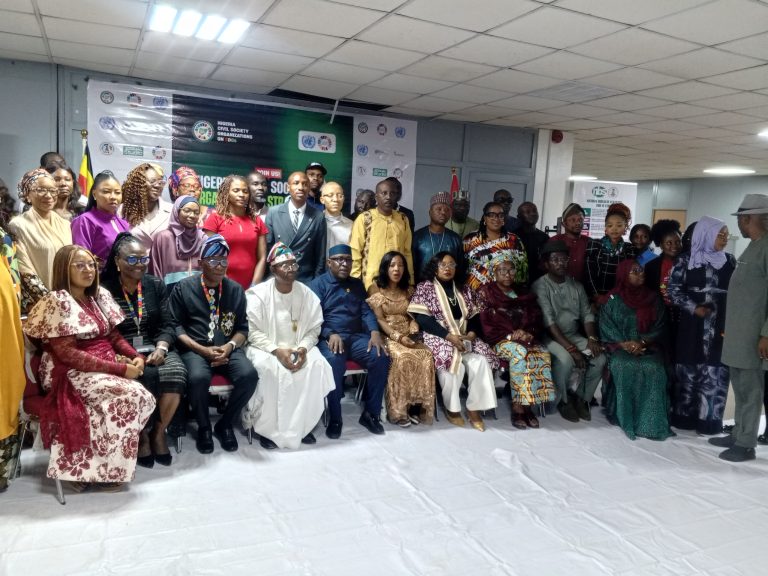
The call was made at the National SDGs Conference organised by the Nigeria Civil Society Organisations Strategy Group on SDGs (CSOSG-SDGs) in Abuja.
The conference, which focused on strengthening civil society partnerships for SDG acceleration, brought together stakeholders to examine strategies for advancing the 2030 Agenda through multi-stakeholder collaboration, grassroots engagement and measurable development outcomes.
The Director-General of the NBS, Adeyemi Adeniran, represented by Babalola David, said achieving the 17 SDGs requires the active participation of government, civil society organisations, the private sector, academia, communities and individual citizens.
He described civil society organisations as critical partners in grassroots mobilisation, advocacy and independent monitoring, particularly in ensuring that development policies address the needs of vulnerable and underserved populations.
Adeniran highlighted the Bureau’s contributions through citizen-generated data, community-level monitoring and independent assessments, noting that reliable data is essential for tracking progress, identifying development gaps and measuring Nigeria’s performance against SDG targets.
He also called for increased domestic revenue mobilisation, innovative financing mechanisms and stronger public-private partnerships, alongside transparency and accountability in the allocation and utilisation of development resources.
Also speaking, the Senior Technical Adviser in the Office of the Senior Special Assistant to the President on Sustainable Development Goals, Dr Bala Yunusa, called for sustained commitment to the 2030 Agenda, adopted by world leaders in September 2015 to promote an economically sustainable, socially inclusive and environmentally resilient world.
He explained that his office, established in January 2016, coordinates SDG implementation across government institutions, builds partnerships and promotes the integration of relevant targets into sectoral policies and plans using existing budgetary resources.
Similarly, Ambassador Caroline Usikped urged stakeholders to intensify implementation efforts, warning that economic difficulties, inflation, climate shocks and insecurity could undermine progress in critical areas such as poverty reduction and quality education.
She commended civil society organisations for supporting vulnerable communities through budget monitoring, exposing financial leakages and providing primary healthcare services in hard-to-reach areas.
The conference also featured technical sessions on SDG data, innovation, energy transition, artificial intelligence governance and Behaviour Change Communication, alongside keynote addresses and high-level multi-stakeholder dialogues on accelerating Nigeria’s 2030 Agenda.
Participants were also expected to unveil the Abuja Declaration on SDG Partnership and the National SDG Partnership and Resource Framework, aimed at strengthening collaboration and resource mobilisation for SDG implementation. Outstanding SDG champions were also recognised for their contributions to advancing the goals.



Abuja’s number one hit music and talk radio station. Broadcasting 24/7 on 99.9FM across the Federal Capital Territory and streaming live worldwide.
© KissFM 99.9 All rights reserved.