The Nigeria Customs Service (NCS) has announced additional guidelines for the implementation of fiscal incentives under the Federal Government’s Presidential Gas for Growth Initiative, aimed at promoting cleaner energy alternatives and sustainable transportation.
The Service said in a statement that the guidelines were issued by the Federal Ministry of Finance as part of President Bola Ahmed Tinubu’s administration’s efforts to encourage the adoption of alternative fuel technologies and reduce transportation and energy costs.
Under the approved incentives, specified environmentally friendly and gas-powered vehicles, equipment and components will be exempted from Import Duty and Value Added Tax. The eligible categories include 100 per cent Compressed Natural Gas (CNG) vehicles, 100 per cent Liquefied Petroleum Gas (LPG) vehicles, pure electric vehicles and Extended Range Electric Vehicles with a minimum pure electric range of 200 kilometres.
The incentives also cover CNG and LPG conversion kits for petrol and diesel vehicles, tricycles and motorbikes certified for resale by the Federal Ministry of Finance, as well as semi-trailers fitted with skid-mounted CNG, LPG and Liquefied Natural Gas storage tanks for gas distribution.
The NCS, however, said importers seeking to benefit from the incentives must obtain an Import Duty Exemption Certificate from the Federal Ministry of Finance and comply with all applicable regulatory requirements governing the importation of eligible items.
It added that certain vehicles and related items would remain subject to Import Duty and VAT. These include hybrid electric vehicles, dual-fuel CNG/petrol or CNG/diesel vehicles, luxury vehicles valued at 100,000 US dollars and above, overseas-converted CNG vehicles without factory-fitted CNG capability, non-self-driven semi-trailers and flatbeds, and spare parts of all kinds.
The Service said the incentives were designed to support the Federal Government’s objectives of reducing transportation and energy costs, attracting investment in clean energy infrastructure, promoting alternative fuel technologies, and strengthening Nigeria’s energy security and environmental sustainability.
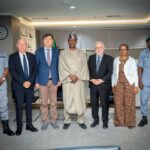
The NCS, under the leadership of Comptroller-General of Customs, Bashir Adewale Adeniyi, further urged importers, licensed customs agents and other stakeholders to ensure strict compliance with the approved guidelines.

Abuja’s number one hit music and talk radio station. Broadcasting 24/7 on 99.9FM across the Federal Capital Territory and streaming live worldwide.
© KissFM 99.9 All rights reserved.