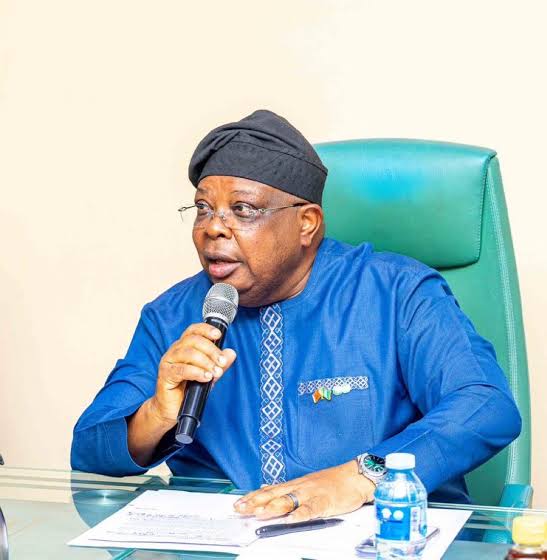
Abuja, Nigeria – The Minister of Power, Joseph Tegbe, says Nigeria has added more than 15,000 megavolt-amperes (MVA) of transmission capacity to the national grid between 2023 and October 2026.
Tegbe disclosed this on Thursday at the Sixth Annual Conference of the Power Correspondents Association of Nigeria (PCAN), where he was represented by his special adviser, administrative and project, Martin Olajide. He outlined the Federal Government’s efforts to improve electricity supply and support the country’s ambition of building a one-trillion-dollar economy.
Speaking on the theme, “$1 Trillion Economy: Nigeria’s Roadmap to Reliable and Affordable Power Supply,” the minister said reliable and affordable electricity was critical to industrial growth, increased production and investment.
He noted that President Bola Tinubu had approved a ₦3.3 trillion plan to settle verified legacy debts owed to electricity generation companies, adding that ₦1.23 trillion had so far been raised under the initiative to ease financial pressures on power generators.
The minister also disclosed that more than 2.8 million electricity customers had been metered under the Presidential Metering Initiative, while the Rural Electrification Agency had connected universities, hospitals and rural communities to solar power.
He added that construction had commenced on a new ultramodern National Grid Control Centre in Osogbo to replace the existing facility, which was built more than 60 years ago.
According to him, newly installed substation equipment commissioned across several locations in the past two months, including Kumbotoso, Dankata, Mashi, Dan-Agundi, Apapa, Ijora, Ikeja, Biliri and Walalambe, had added more than 1,300MVA to the country’s transmission capacity.
Tegbe identified vandalism as a major threat to the power sector, saying the President had approved a coordinated anti-vandalism campaign involving security agencies, alongside a strengthened legal framework to protect critical electricity infrastructure and ensure offenders were held accountable.
He said the ministry had also developed a four-pronged roadmap covering grid stabilisation, sector liquidity and sustainability, asset optimisation, and grid expansion and enhancement.
The plan includes a corridor-based approach targeting major economic centres, with a technical audit commissioned to identify infrastructure gaps and guide interventions.
The minister identified the Lagos-Ogun, Benin-Enugu-Port Harcourt and Abuja-Kaduna-Kano corridors as priority economic zones.
He said the Lagos-Ogun axis and Abuja electricity franchise area, which account for more than 50 per cent of national electricity demand, would serve as pilot locations for the proposed 24-hour energy zones, subject to technical readiness and commercial viability.


Abuja’s number one hit music and talk radio station. Broadcasting 24/7 on 99.9FM across the Federal Capital Territory and streaming live worldwide.
© KissFM 99.9 All rights reserved.