The Minister of State for Industry, Senator John Owan Enoh, has said the launch of the Federal Civil Service Electric Mass Transit Programme is a practical demonstration of President Bola Ahmed Tinubu’s commitment to improving the welfare of Nigerian workers.
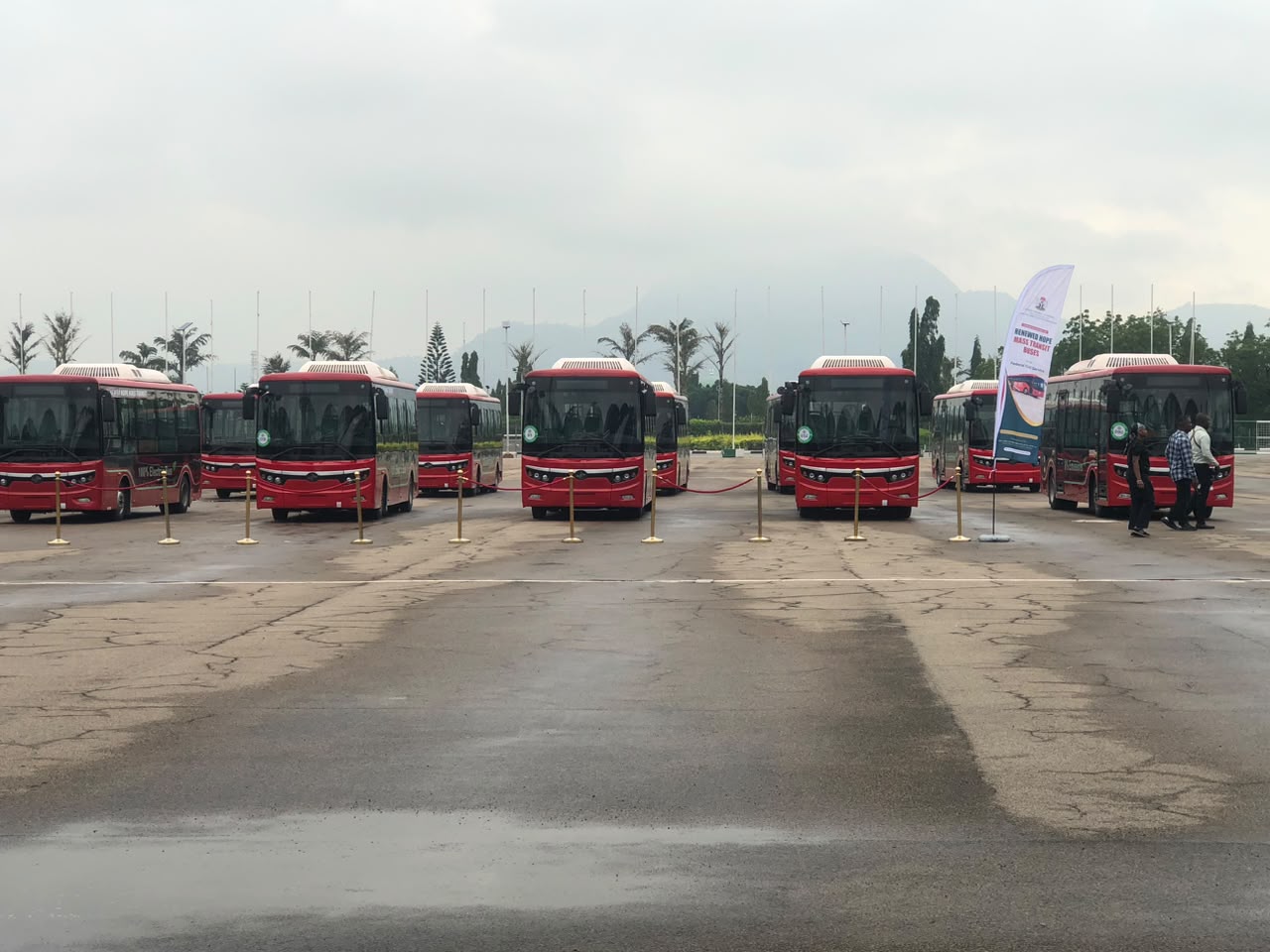
Speaking at the launch and commissioning of the programme at Eagle Square, Abuja, on Wednesday, Enoh said the deployment of 100 electric mass transit buses would provide federal civil servants with safer, more affordable and reliable transportation.
Enoh said the initiative goes beyond the provision of buses, describing it as an intervention that combines workers’ welfare, productivity, industrialisation and the adoption of modern technology. He noted that reliable transportation would reduce pressure on civil servants’ household incomes, improve punctuality and make daily commuting more convenient, particularly amid the economic challenges facing Nigerians.
The Minister said federal civil servants remain central to the implementation of government policies and programmes, stressing the need for continued investment in their welfare. He disclosed that the buses can accommodate up to 200 passengers each and travel a minimum of 200 kilometres on a full charge, adding that the intervention would make a meaningful difference to the daily lives of workers.
Enoh commended the Head of the Civil Service of the Federation, Mrs. Didi Esther Walson-Jack, OON, mni, for her determination in bringing the programme to fruition. He described the initiative as part of her enduring legacy to the Federal Civil Service, noting that civil servants would continue to benefit from the programme beyond her tenure.
He also linked the electric bus programme to the Federal Government’s broader industrialisation agenda, saying Nigeria must increasingly produce the vehicles and mobility solutions required by its growing population. According to him, supporting local manufacturers would create jobs, develop technical skills, strengthen local component production and retain more economic value within the country.
The Minister stressed the need for Nigeria to participate actively in the global transition to electric mobility rather than remain a market for imported technologies. He said the country must develop local capacity in electric vehicle manufacturing, charging infrastructure, battery technology, power electronics, software and other modern automotive systems, while universities and technical institutions produce the skilled workforce required by the emerging industry.
Enoh said the 100 buses should be seen as the beginning of a larger industrial opportunity, expressing the government’s ambition to have Nigerian factories produce thousands of modern buses and components, develop charging infrastructure and create skilled jobs for young Nigerians. He said the long-term objective was to position Nigeria as an automotive manufacturing hub for Africa.
The Minister commended the National Automotive Design and Development Council (NADDC) and other partners for their contributions to the programme, while urging local manufacturers to invest in their factories, deepen local content and maintain world-class standards. He said the Federal Government would continue to create an enabling environment for industry, stressing that its ultimate responsibility was to ensure that economic reforms translated into industries, jobs, infrastructure and tangible improvements in the lives of Nigerians.

Abuja’s number one hit music and talk radio station. Broadcasting 24/7 on 99.9FM across the Federal Capital Territory and streaming live worldwide.
© KissFM 99.9 All rights reserved.