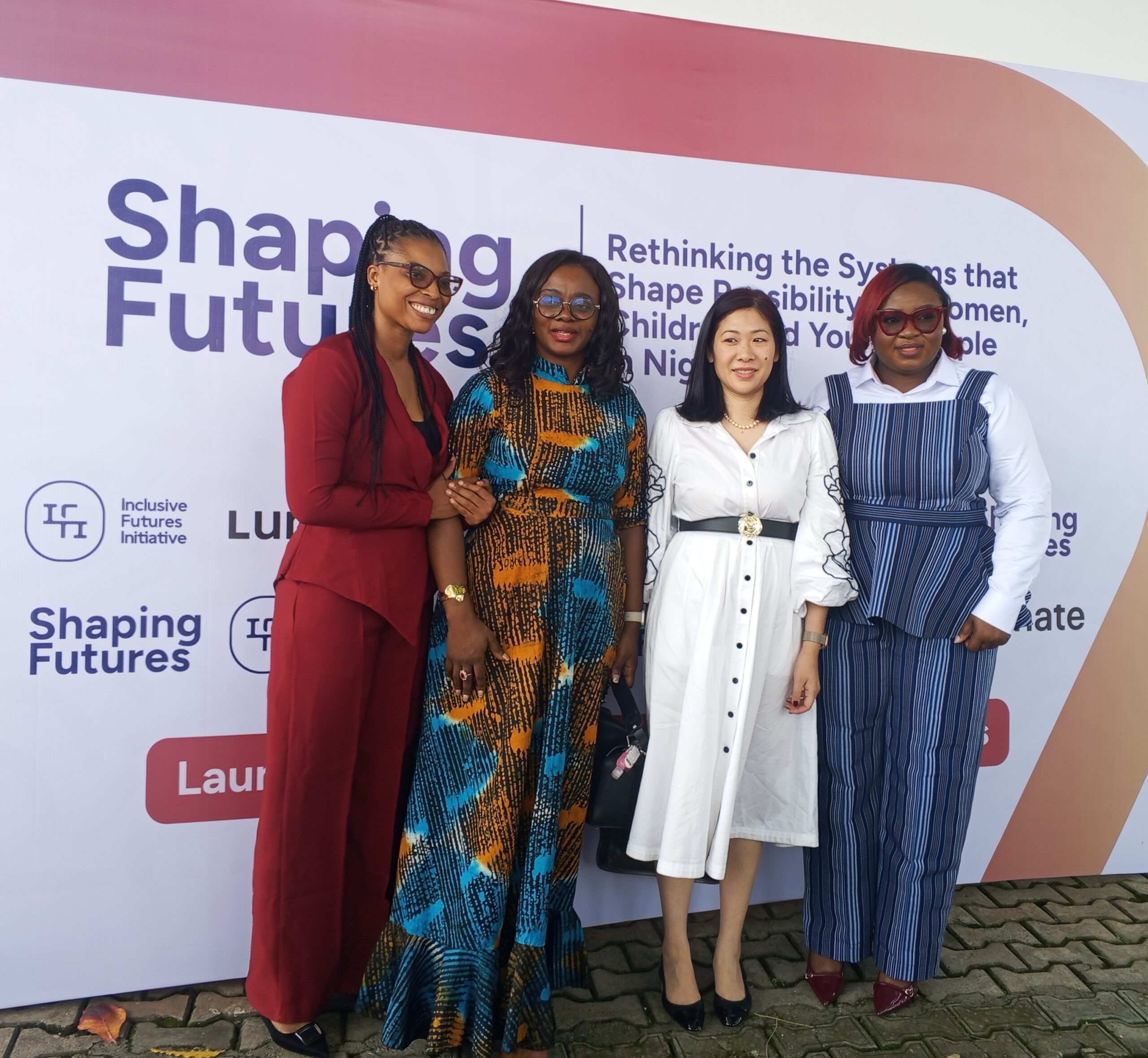
The Executive Director of the Inclusive Futures Initiative, Lucy Okonkwo, has called for stronger protection of women and children’s rights in Nigeria, highlighting gaps in existing laws, weak enforcement and the need for technology-driven advocacy.
She made the call on Friday in Abuja during the launch of the organisation’s inaugural knowledge products, which include a policy research report titled Mapping the Women and Children’s Rights Ecosystem in Nigeria.
The report examines Nigeria’s legal framework for protecting women and children, identifies weaknesses in the institutions responsible for enforcing their rights, and explores how civic technology, reliable data and community engagement can improve protection.
It notes that although women and children make up a substantial proportion of the country’s population, many continue to face barriers to healthcare, education, social welfare and access to justice.
Citing National Bureau of Statistics figures, the report puts women at 49.99 per cent of Nigeria’s population, compared with 50.01 per cent for men. It also estimates that children accounted for about 105 million people in 2024, representing close to half of the population.
Despite their numbers, the report says women and children remain vulnerable to social and economic challenges, including violence, discrimination and limited access to essential services.
One of the major concerns identified is female genital mutilation or cutting (FGM), which the report estimates has affected 20 million women and girls in Nigeria. It lists Katsina as having the highest prevalence among the states cited, at 50 per cent, followed by Ekiti at 48 per cent, Ebonyi at 39 per cent and Imo at 34 per cent. Edo, Delta and Osun each recorded a prevalence of 28 per cent in the figures presented, underscoring the need for targeted prevention and community education.
The report also highlights the scale of child labour, stating that 62.9 million children aged between five and 17 were represented in the cited data, while 24.6 million were engaged in child labour. It further references a survey in which 64 per cent of workers reportedly experienced harassment, with females accounting for 85 per cent of those affected.
These figures point to concerns about children’s safety and the protection of vulnerable people in workplaces, although the report’s underlying sources and survey details would be needed to establish the precise scope of the findings.
Child marriage and online abuse are also identified as serious threats. The report estimates that Nigeria has 24 million child brides, with more than 30 per cent of girls marrying before the age of 18 and 12.3 per cent marrying before 15.
Bauchi is identified as the state with the highest rate of child marriage. On digital safety, the report cites a figure of 97 per cent of Nigerian children experiencing online sexual exploitation and says 58 per cent of online harms target women, particularly those in leadership positions. It also reports that 21 per cent of women aged 15 to 49 have experienced physical or sexual violence.
A further concern is image-based sexual abuse, which involves sharing or manipulating a person’s images without consent. According to the report, advances in artificial intelligence and its use on social media have created new ways to intimidate, humiliate and control women online, with potentially serious effects on their mental health.
It adds that 58 per cent of women who have experienced violence never sought help or disclosed their experiences. Divorced, separated and widowed women were identified as facing a particularly high risk of intimate partner violence, with a reported prevalence of 41 per cent.
On the legal framework, the report identifies the 1999 Constitution, the Child’s Rights Act 2003, the Violence Against Persons (Prohibition) Act 2015, the Criminal and Penal Codes, and legislation on labour and human trafficking as key instruments for protecting women and children.
However, it argues that differences in legal provisions, jurisdiction and implementation have created gaps in protection. In particular, the adoption and enforcement of the Child’s Rights Act across states remain important challenges, while cultural and religious practices can conflict with statutory protections against child marriage and other abuses.
The report notes that Nigeria’s domestic laws draw on international and regional human rights agreements, with broad agreement on the principles of protecting women and children. The major challenge, it argues, is translating those commitments into effective action.
The Child’s Rights Act, for instance, establishes the best interests of the child as a primary consideration and provides for rights relating to education, healthcare, freedom from discrimination, parental care and maintenance. However, differences in interpretation and enforcement can weaken these protections in practice.
Institutional weaknesses further complicate efforts to secure justice for victims. The report cites figures indicating that the National Human Rights Commission received 1.2 million petitions in 2021, with a significant share concerning sexual and gender-based violence, children’s rights and women’s rights. It also highlights the National Agency for the Prohibition of Trafficking in Persons, which it says has assisted more than 5,000 trafficking victims since its establishment. Sexual Assault Referral Centres are also credited with helping 19,000 victims by 2020, about 70 per cent of whom were under 18.
The report warns that stigma, victim-blaming, delays and negative stereotypes among some law enforcement personnel can discourage survivors from seeking help.
Civil society organisations and the media are also identified as important parts of the rights-protection system. The report highlights groups providing legal assistance to survivors of gender-based violence, networks working to end child marriage, and research organisations supporting women’s reproductive health.
However, it argues that media coverage sometimes prioritises sensational stories over sustained reporting on the causes and consequences of abuses. It calls for more responsible journalism that informs the public, challenges harmful social norms and supports accountability.
To address these challenges, the report recommends an integrated data system linking relevant government agencies, state ministries, Sexual Assault Referral Centres and civil society organisations. Such a platform, with appropriate privacy and security safeguards, could help track incidents of child marriage, FGM, child labour and gender-based violence across states, identify areas with the greatest needs and guide the allocation of resources.
It also proposes mobile and web-based tools to help people understand their rights, report violations and access legal assistance, alongside digital literacy programmes to protect adolescent girls from online abuse.
The report further advocates community-based data collection involving health workers, teachers and local leaders, supported by secure digital tools and artificial intelligence. It argues that combining technology with local knowledge could improve the quality of information, strengthen community participation and help decision-makers respond more effectively to violations.
Overall, the Inclusive Futures Initiative’s research calls for closer collaboration among government institutions, civil society, the media and communities to bridge the gap between legal protections and the realities faced by women and children.
It concludes that a new civil society organisation can help drive this change by combining civic technology, evidence-based advocacy and community engagement to advance their rights across Nigeria.





Abuja’s number one hit music and talk radio station. Broadcasting 24/7 on 99.9FM across the Federal Capital Territory and streaming live worldwide.
© KissFM 99.9 All rights reserved.