Every day, money that belongs to Nigerians leaves the country quietly.
It does not leave in a suitcase. It does not leave with a loud announcement. It leaves through paperwork, through trade, through hidden company ownership, and through profits shifted to other countries.
This is what experts call illicit financial flows. And for ordinary Nigerians, the consequences are not abstract. They are felt in everyday life.
1. Fewer Roads, Hospitals And Schools
When money is diverted from the public treasury, government has less to spend.
That means a road that should have been repaired remains bad. A hospital that should have been equipped lacks drugs and beds. A school that should have been built remains a promise.
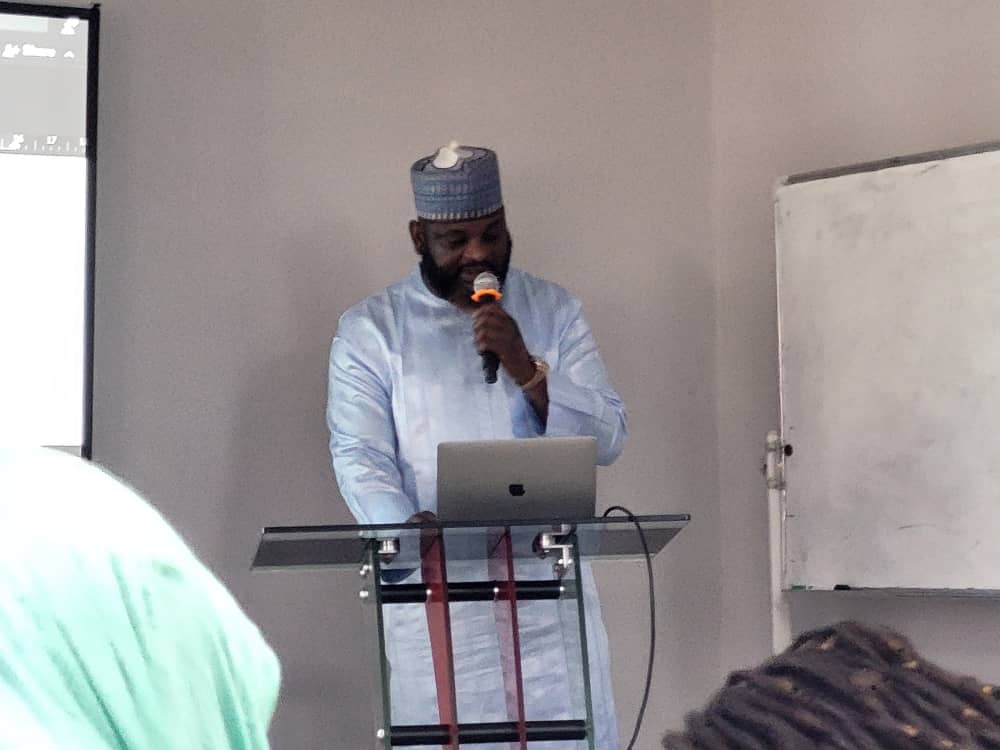
Mr. Idris Mohammed Abdullahi, Head of Liaison, Anti-Graft and Law Enforcement at the Nigeria Revenue Service, put it simply at a recent training for journalists in Abuja: every naira unlawfully diverted is money that could have built roads, hospitals, schools, and provided electricity and security for millions of Nigerians.
In 2024 alone, Nigeria’s estimated trade-related illicit financial flow value at risk was about 53.9 trillion naira. Even if only a part of that is real loss, it is enough to change the lives of millions.
2. Higher Burden On Honest Citizens And Businesses
When big companies and wealthy individuals avoid tax or shift profits abroad, the tax burden does not disappear. It falls on those who cannot hide.
Small business owners, salary earners and market traders end up carrying a heavier load. They pay tax, pay levies, and still pay for services government should provide, like water, power, and security.
Honest businesses also suffer. They compete with companies that cheat the system, cut corners, and pay less tax. That makes the market unfair.
3. Weak Institutions And Poor Services
Illicit flows weaken the institutions meant to protect Nigerians.
When Customs cannot detect false declarations, when regulators cannot see who truly owns a company, and when agencies do not share information, criminals find it easy to operate.
The result is a system where rules exist on paper, but enforcement is weak. Citizens lose trust. They begin to believe that nothing works, and that the system only favours the connected.
4. Fewer Jobs And Slower Growth
Nigeria has a large, young and energetic population. It should be creating millions of jobs every year.
But when profits are taken out of the country instead of being reinvested here, factories do not expand, farms do not grow, and new businesses do not start.
Money that should have created jobs in Lagos, Kano, Abuja, Port Harcourt, or Enugu ends up building wealth in another country.
5. More Poverty And Inequality
Illicit flows widen the gap between the rich and the poor.
A few people get richer by hiding wealth, while millions struggle to feed their families, pay school fees, and access healthcare.
A child in a village without a classroom, a mother who cannot afford hospital bills, and a graduate without a job are all paying the price for money that left the country illegally.
6. A Damaged Reputation And Lost Investment
When a country is seen as a place where money can be hidden and moved easily, serious investors become afraid.
They worry about unfair competition, corruption, and unstable rules. They take their money elsewhere.
Nigeria then loses not only the money that left, but also the investment that never came.
7. Threat To Security
Illicit flows are also linked to crime. Money from corruption, fraud, and other crimes is moved, hidden, and reused. That money can fund more crime and insecurity.
When the financial system is abused, it becomes harder to trace and stop criminal networks.
Why Nigerians Should Care
Illicit financial flows are often described with big words like trade misinvoicing, transfer pricing, and beneficial ownership concealment. But the meaning is simple.
It is money meant for Nigeria’s development being taken away, hidden, or lost.
That is why Abdullahi urged journalists to go beyond reporting that money has disappeared. He wants them to explain how it disappeared, who benefited, and what Nigerians lost as a result.
Nigeria is now trying to fight back. The country is tightening rules on cryptocurrency, pushing for disclosure of real company owners, digitising Customs with systems like B’Odogwu, monitoring oil and mineral exports more closely, and introducing a 15 percent minimum tax for large multinational companies.
But Abdullahi said government alone cannot win the fight. Citizens must understand what is at stake.
As he told journalists in Abuja: “A society that cannot follow its money will struggle to secure its future.”
For Nigerians, following the money is not just a slogan. It is about protecting schools, hospitals, roads, jobs, and the future of the country.



Abuja’s number one hit music and talk radio station. Broadcasting 24/7 on 99.9FM across the Federal Capital Territory and streaming live worldwide.
© KissFM 99.9 All rights reserved.