The Federal Government has called for stronger alignment between development partners’ interventions and Nigeria’s national priorities. The call was made as the Korea International Cooperation Agency, KOICA, and the Food and Agriculture Organisation, FAO, prepare to roll out a new multi-bilateral agricultural project in Nigeria.
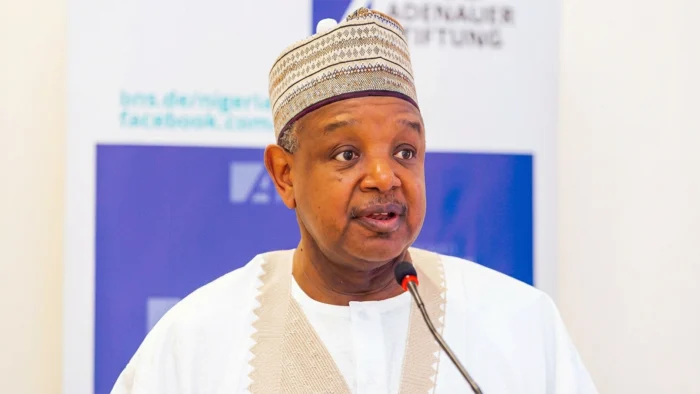
Minister of Budget and Economic Planning, Senator Abubakar Atiku Bagudu, made the call on Wednesday during a courtesy visit by KOICA officials. They briefed the Ministry on the KOICA-FAO 2026 Multi-Bilateral Project aimed at promoting resilient agricultural systems and creating green jobs for youth across Africa.
Senator Bagudu commended Nigeria’s longstanding partnership with Korea through KOICA. He said Nigeria can learn from Korea’s transformation from an agricultural economy to a global economic power, especially in areas of food production, value addition, and export development.
The Minister stressed that interventions must be focused, measurable and scalable. He said development partners should target specific communities instead of spreading projects too thin, so that successful models can be replicated and attract private sector investment.
He noted that the Ministry of Budget and Economic Planning coordinates national planning and partnerships. He urged KOICA and FAO to align their project with Nigeria’s Agenda 2050 and the Renewed Hope Ward Development Programme, which covers all 8,809 wards in the country.
Senator Bagudu cited examples such as women rice farmers in Nasarawa State who need better technology and market access, and aquaculture opportunities in Bayelsa State. He added that Nigeria has strong potential in sesame, cocoa, fisheries and other high-value commodities for international markets.
The Minister said farmers need more than production support. They must also be trained on market demands, value addition and globally competitive practices. “Sometimes what is needed is to teach people what the world requires,” he said.
KOICA’s Senior Deputy Country Director, Mr. Baik Ki-Hyun, said the project was approved to run from 2026 to 2030. FAO will serve as implementing partner while KOICA will handle management, monitoring and evaluation. The Permanent Secretary, Dr. Deborah Odoh, said the intervention will boost growth, livelihoods and sustainable agriculture in Nigeria.