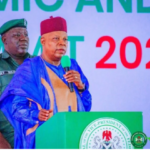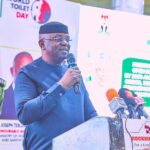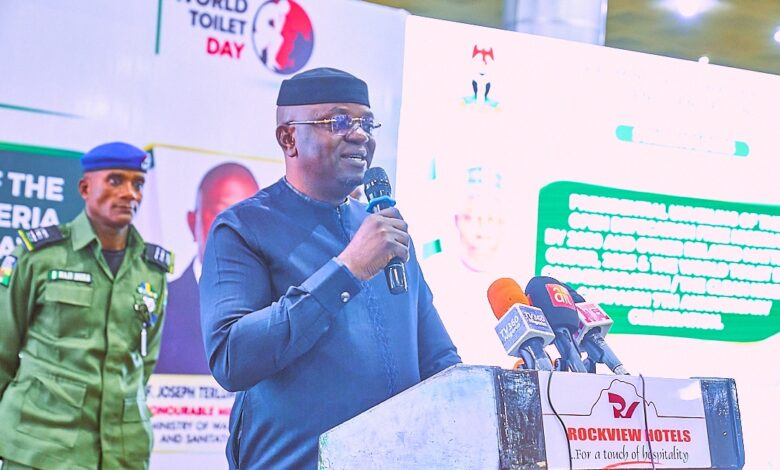
ABUJA, Nigeria – Seven years after Nigeria declared war on open defecation, the country gathered again in Abuja on Thursday, Nov 19,2026 — not to celebrate victory, but to renew a promise: that by 2030, no Nigerian should have to relieve themselves in the open.
It was World Toilet Day, and also the 7th anniversary of the Clean Nigeria: Use the Toilet Campaign.
The message was clear that progress has been made, but the journey is far from over.
Welcoming Vice President Kashim Shettima and other dignitaries, the Minister of Water Resources and Sanitation, Joseph Terlumun Utsev, said the occasion was a moment to reflect, assess progress, learn lessons, and reaffirm the federal government’s commitment to an open defecation-free Nigeria by 2030.
Over the past seven years, he said, the campaign has grown from a slogan into a national platform for policy coordination, community mobilization and performance monitoring. Under the leadership of the vice president as chairman of the National Steering Committee, the government has strengthened its framework through the Revised Clean Nigeria Strategy 2025-2030, built on six pillars: enabling environment, partnerships and coordination, public finance, service delivery, advocacy and communication, and monitoring, evaluation, learning and accountability.
One of the biggest gains, Utsev noted, is data. The Clean Nigeria Real-Time Monitoring and Information System now allows the country to track performance and hold actors accountable. So far, 185 local government areas have attained open defecation-free status, while Jigawa and Katsina states have achieved statewide status.
“It demonstrates that political commitment, effective coordination and community ownership can produce measurable results,” he said.
But the minister was quick to add that the milestone that matters most may be the one unveiled on Thursday — the revised Presidential Executive Order 009, signed by President Bola Tinubu following the extension of the national target to 2030. The order, he said, reinforces the government’s commitment, strengthens the policy framework, and gives fresh impetus to coordination, private sector engagement, monitoring and accountability.
Ending open defecation, Utsev stressed, is a shared national responsibility. It will take federal, state and local governments, plus every stakeholder, working together.
Seven years have also taught hard lessons, he said. Political commitment must translate into financing and practical action. Achieving open defecation-free status is not enough — communities must not slide backwards. Community ownership and sustained behavioral change are essential. Sanitation needs a multisectoral approach involving health, education, environment and youth development. And reliable data must guide planning and accountability.
As the celebration ended, Utsev expressed confidence that with continued support from the federal government, state governments, development partners and all stakeholders, Nigeria can still achieve its vision , a country where every citizen enjoys access to safe sanitation and the dignity it provides.

Abuja’s number one hit music and talk radio station. Broadcasting 24/7 on 99.9FM across the Federal Capital Territory and streaming live worldwide.
© KissFM 99.9 All rights reserved.