ADDIS ABABA, Ethiopia — The Federal Government has showcased its Renewed Hope Housing Public-Private Partnership model at a continental forum in Addis Ababa, where African countries are seeking to replicate it.
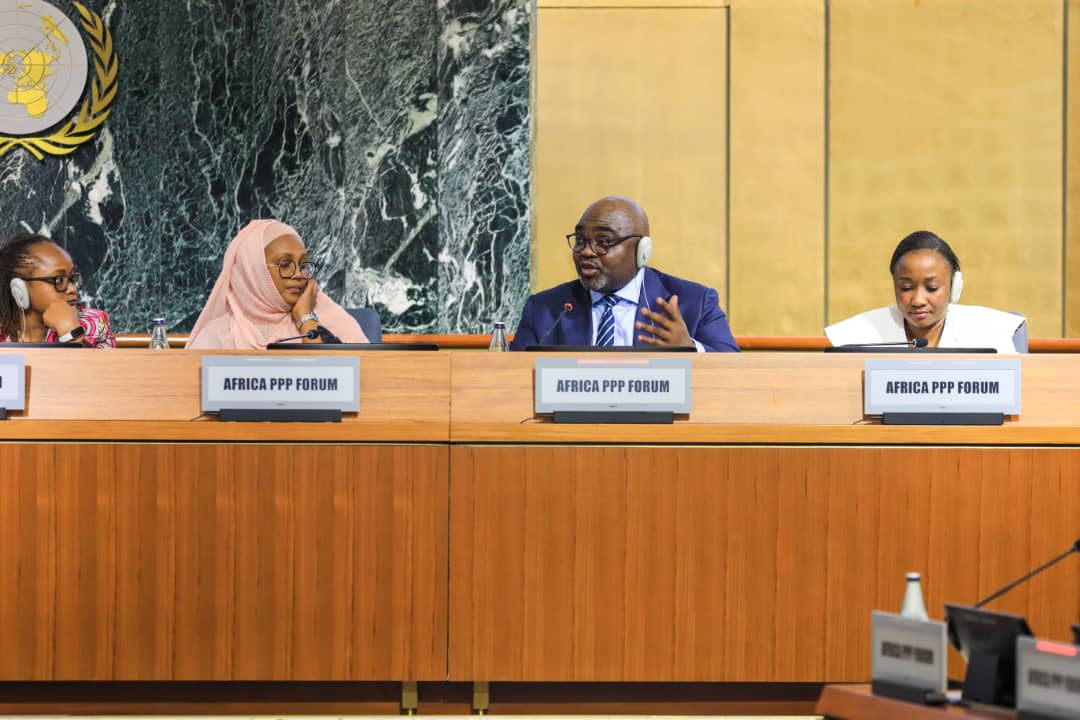
The model was presented by the Director-General of the Infrastructure Concession Regulatory Commission, Dr. Jobson Oseodion Ewalefoh, at the Second Forum for Public-Private Partnership Units in Africa.
The forum was held at Africa Hall, United Nations Economic Commission for Africa, with delegations from 36 countriees.
It was co-organised by the United Nations Economic Commission for Africa, the African Development Bank and the African Legal Support Facility. The theme was “Making Social Sector PPPs Work: From Policy Ambition to Effective Service Delivery.”
The forum builds on the first edition held in 2024, which focused on climate-resilient infrastructure.
This year, heads of PPP units, development finance institutions, private operators and advisers discussed how PPPs can deliver housing, health care, education, sanitation and water at affordable prices.
Unlike roads and power plants, social infrastructure often does not earn enough from user fees to repay investors, making affordability and fiscal sustainability critical.
The two-day forum featured leaders’ dialogue, breakout sessions and project clinics on risk sharing, availability payments, viability gap funding, subnational PPPs and contract management.
Nigeria was one of five countries that presented at the project clinic, alongside Malawi, Kenya, Djibouti and Côte d’Ivoire.
Ewalefoh said the Renewed Hope Cities will deliver 100,000 housing units across selected cities under a joint venture concession with the private sector.
”The beauty of this PPP structure is that it is not the conventional PPP. In this case, the private party owns the land, has the design, is financing it and is doing the construction,” he said.
He said under President Bola Tinubu’s Renewed Hope Agenda, government agreed to de-risk the project to attract private capital.
With commercial lending rates above 23 percent in Nigeria, housing finance at market rates is out of reach for most developers and buyers.
To address this, government guaranteed a market by designating middle-income federal civil servants as off-takers. It also promised access roads to semi-urban sites.
Government unlocked about $19 million in single-digit interest funding through the Federal Mortgage Bank of Nigeria and another $20 million in concessionary loans through the Family Homes Fund.
Buyers also benefit from lower mortgage rates through a $112 million MOFI Real Estate Investment Fund. Sale prices were negotiated to keep homes affordable, with a cap of one unit per buyer to stop speculation.
Ewalefoh said these steps cut project cost by about 30 percent.
”Government does not need to finance housing capital projects. It can crowd in private capital through policy, land availability and off-taker facilitation to create a replicable, scalable model,” he said.
The structure means government is delivering homes without directly funding construction. About $39 million in concessionary funding is unlocking about $125 million in private sector investment.
The model drew strong interest at the forum. Delegates asked how its de-risking tools, especially off-taker guarantee and concessionary finance, could be adapted in their countries.
Delegations from all 36 countries shared their own experiences, successes and challenges.
While delegates studied Nigeria’s approach, the Nigerian delegation also learned from other countries on structuring, risk allocation and implementation to improve its own social sector PPP pipeline.


Abuja’s number one hit music and talk radio station. Broadcasting 24/7 on 99.9FM across the Federal Capital Territory and streaming live worldwide.
© KissFM 99.9 All rights reserved.