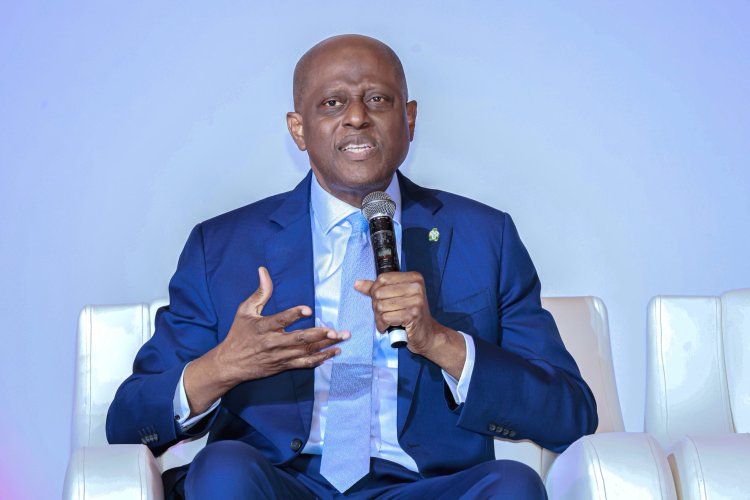
Abidjan, Côte d’Ivoire – The Governor of the Central Bank of Nigeria (CBN), Olayemi Cardoso, has called for equity, fairness and proportional representation in the governance structure of the proposed ECOWAS Monetary Union.
Cardoso said regional solidarity and respect for the sovereign equality of member states must remain fundamental principles of the Union, but should be balanced with the relative financial commitments, responsibilities and risks borne by individual member states, particularly in determining participation in decision-making and governance.
He spoke on Friday on behalf of Nigeria at the Ministerial Session of the 6th Presidential Task Force Meeting on the ECOWAS Single Currency Programme in Abidjan, Côte d’Ivoire. The Ministerial Committee comprises ministers of finance and governors of central banks of task force member states.
He described the meeting as a defining milestone in the ECOWAS monetary integration process, noting that deliberations had focused on critical considerations regarding the institutional architecture of the proposed Monetary Union, including the location of its institutions, leadership appointments, and the allocation of authority and responsibilities.
”The decisions we take today will shape the future of the Union for decades to come,” Cardoso told delegates. “They will influence its credibility in the eyes of investors and development partners, its legitimacy in the eyes of our citizens, and the confidence of member states that their commitments are being matched by a meaningful voice within the institutions they are helping to build.”
He restated Nigeria’s commitment to the ECOWAS Monetary Cooperation Programme and to establishing the ECO, describing it as longstanding and unwavering, and citing substantial financial contributions, sustained technical support, and compromises made in the broader interest of regional consensus.
”Nigeria has and will continue to demonstrate solidarity and fairness, respecting the sovereignty of other member states. We remain fully committed to the successful establishment of the ECO and to a Monetary Union that is credible, sustainable and beneficial to all member states,” Cardoso said.
He said solidarity must be accompanied by equity, arguing that countries with larger economies and greater financial responsibilities should be given fair consideration in the governance of the institutions they support.
”While bigger economies continue to take up the burden, they should also be considered to play a significant role because of the risk and systemic importance they have in the sub-region. Above all, such economies need to defend the huge contribution they make before their respective parliaments and the civil society. Where obligations are shared but influence is not, arrangements may be agreed, but their long-term sustainability may be difficult to guarantee,” he added.
Cardoso said Nigeria’s position was not driven by dominance or entitlement but by a sense of responsibility stemming from its status as the region’s largest economy and one of the principal contributors to the proposed Union.
He said Nigeria “will commit substantial financial resources, reserves and institutional capital to the success of the Monetary Union”, adding that it was therefore reasonable that responsibility, accountability and participation in governance should be appropriately aligned with the scale of those commitments.
He urged delegates to approach the deliberations with openness, mutual respect and a willingness to compromise, and expressed confidence that a balanced outcome could be achieved through a shared commitment to building a strong, stable and prosperous Monetary Union.
He further stressed the importance of ensuring that every member state had a tangible stake in the Union’s success and that no country was left with the burden of obligations without a corresponding voice in its governance.
The meeting, which focused on accelerating preparations for the phased introduction of the proposed ECO single currency from 2027, provided a forum for member states to deliberate on the critical institutional and governance arrangements required for the successful establishment of the ECOWAS Monetary Union.


Abuja’s number one hit music and talk radio station. Broadcasting 24/7 on 99.9FM across the Federal Capital Territory and streaming live worldwide.
© KissFM 99.9 All rights reserved.