ABUJA – The Minister of Budget and Economic Planning, Sen. Abubakar Bagudu, has said President Bola Tinubu is committed to sustaining the economic reform programme of his administration.
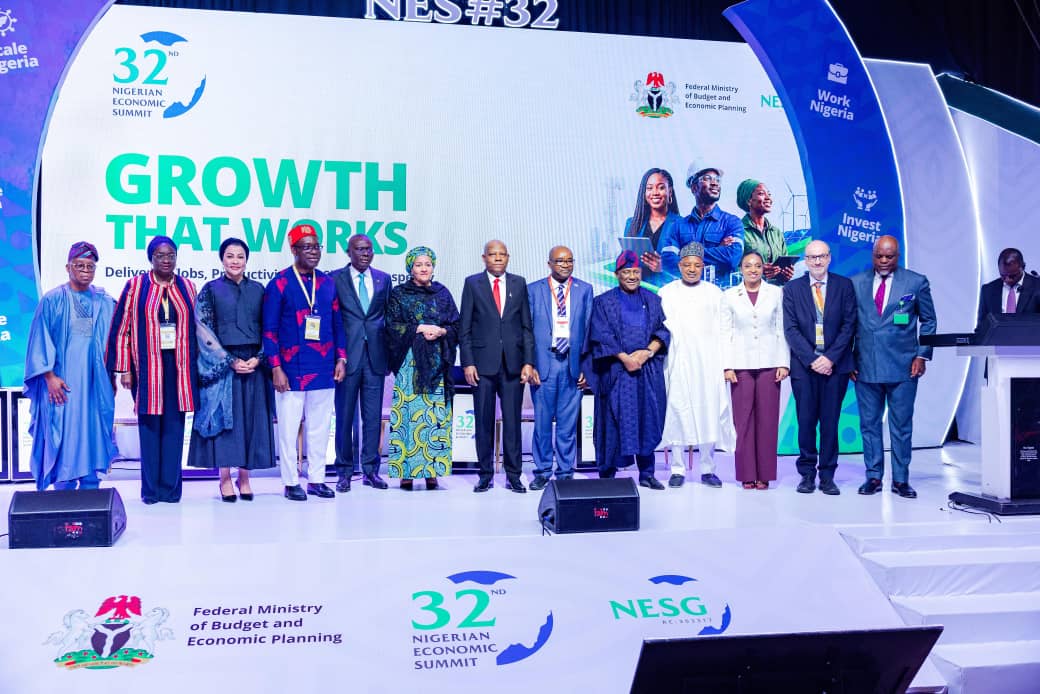
Bagudu said this on Monday in Abuja at the opening of the 32nd Nigerian Economic Summit (NES#32) themed “Growth that Works: Delivering Jobs, Productivity and Shared Prosperity”.
He said the directive for those serving under the President and Vice President is clear.
“For those of us serving under the President and Vice President, the instruction has been clear: we must stay the course,” he said.
The minister was reacting to calls by some opposition politicians, including former Vice President and African Democratic Congress presidential candidate, Alhaji Atiku Abubakar, to restore petrol subsidy to reduce cost of living.
Bagudu said returning to subsidy would erode the gains of the reforms that have stabilised the economy.
He said the President had presented a memorandum on the sustainability of the reforms at the National Economic Council meeting in October 2025, where differing opinions were discussed.
He said while the government will sustain the reforms, it will make necessary policy adjustments to respond to current economic realities.
“There will be no return to the fuel subsidy and the economic distortions associated with the previous system,” Bagudu said.
He said the priority now is to consolidate progress, improve implementation and ensure that growth translates into jobs and shared prosperity.
Bagudu said the Renewed Hope Agenda aims to reposition the economy for sustainable growth by addressing structural distortions and expanding productive activities.
He noted improvements in macroeconomic indicators and increased revenue to federal, state and local governments, saying it reflects the President’s commitment to fiscal federalism.
He acknowledged the economic pressures facing households and businesses, but said government is investing in agriculture, manufacturing, infrastructure, digital technology and human capital to achieve inclusive growth.
He highlighted the Renewed Hope Ward Development Plan, which seeks to unlock productive opportunities across the 8,809 wards in the country.
According to him, the plan will identify economic strengths of communities in agriculture, fishing, livestock and textiles and provide targeted support to stimulate local production and create jobs.
On agriculture, the minister said government is focusing on access to inputs, financing, mechanisation, irrigation and stronger value chains to reduce post-harvest losses and improve food security.
He also cited the Nigeria Industrial Policy 2025 and the Nigeria First Policy as part of efforts to strengthen local manufacturing and reduce import dependence.
Bagudu said government is collaborating with the European Union and the European Bank for Reconstruction and Development on a 90,000-kilometre fibre-optic project to expand broadband connectivity.
He said human capital development remains critical, highlighting interventions in education, health and skills development, including the Nigerian Education Loan Fund.
The minister called for improved access to finance for micro, small and medium enterprises and stronger collaboration between government and the private sector to bridge the development financing gap.
He said achieving the target of a one-trillion-dollar economy by 2030 will require improved productivity, private sector participation and a more competitive business environment.


Abuja’s number one hit music and talk radio station. Broadcasting 24/7 on 99.9FM across the Federal Capital Territory and streaming live worldwide.
© KissFM 99.9 All rights reserved.